You're on the list The Frame arrives every month. |
| · Previous issue 02 · All issues |
|
The Frame
a letter from Kfir Harbi
Thoughts on creating in a world of new possibilities.
| ||||||
| Special edition · Issue 03 · The Frame | ||||||
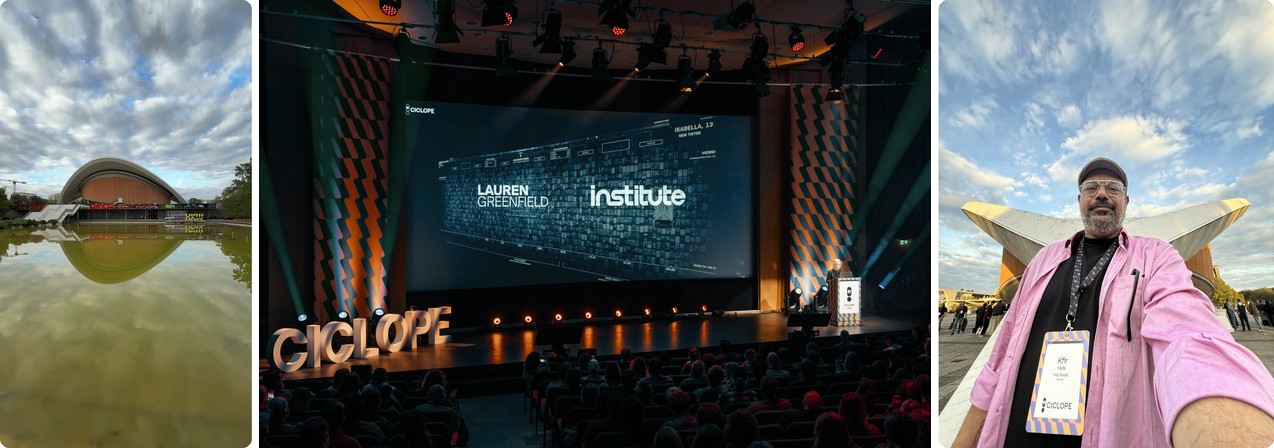
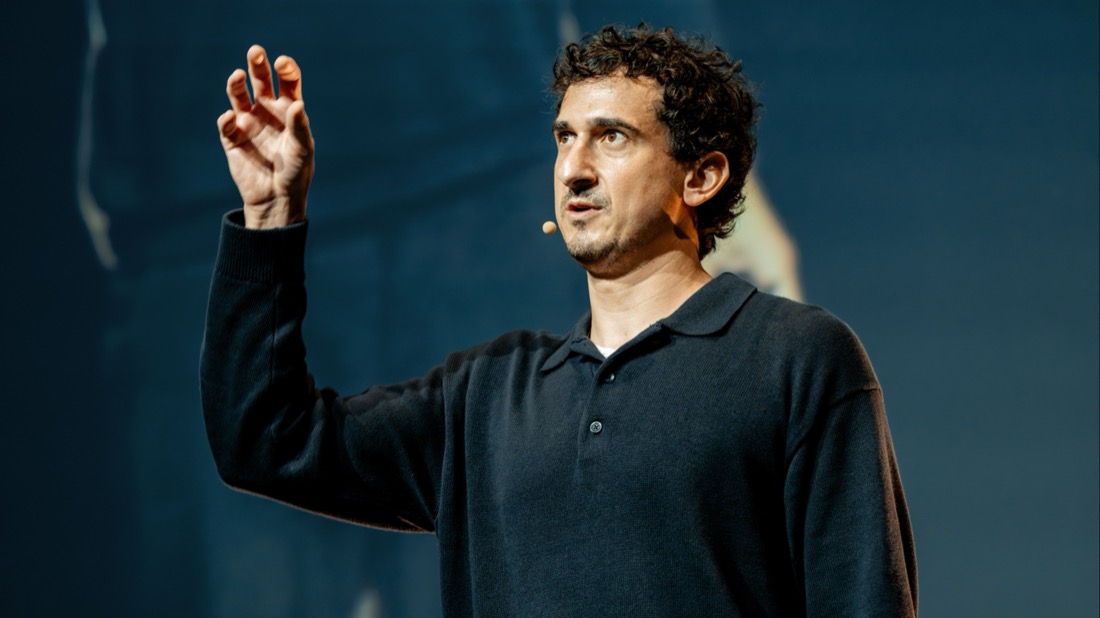
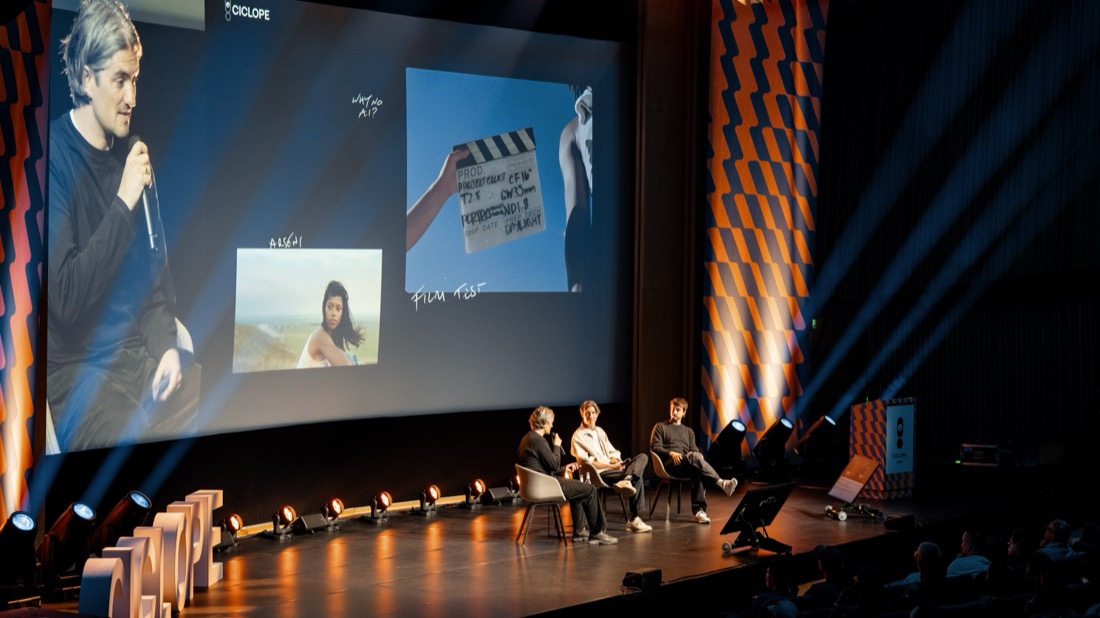
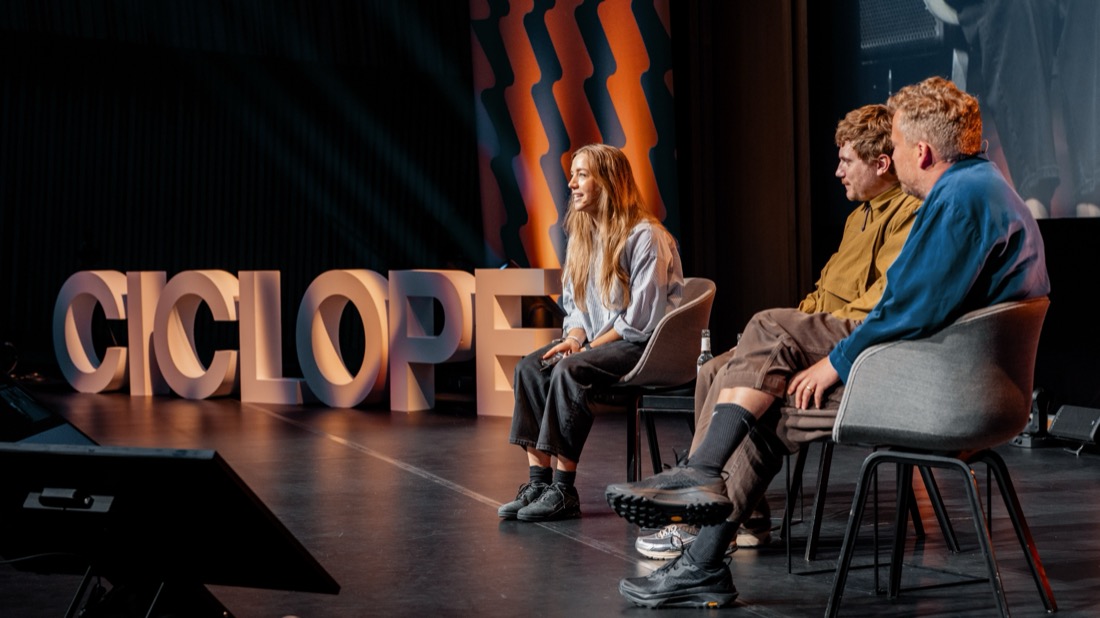
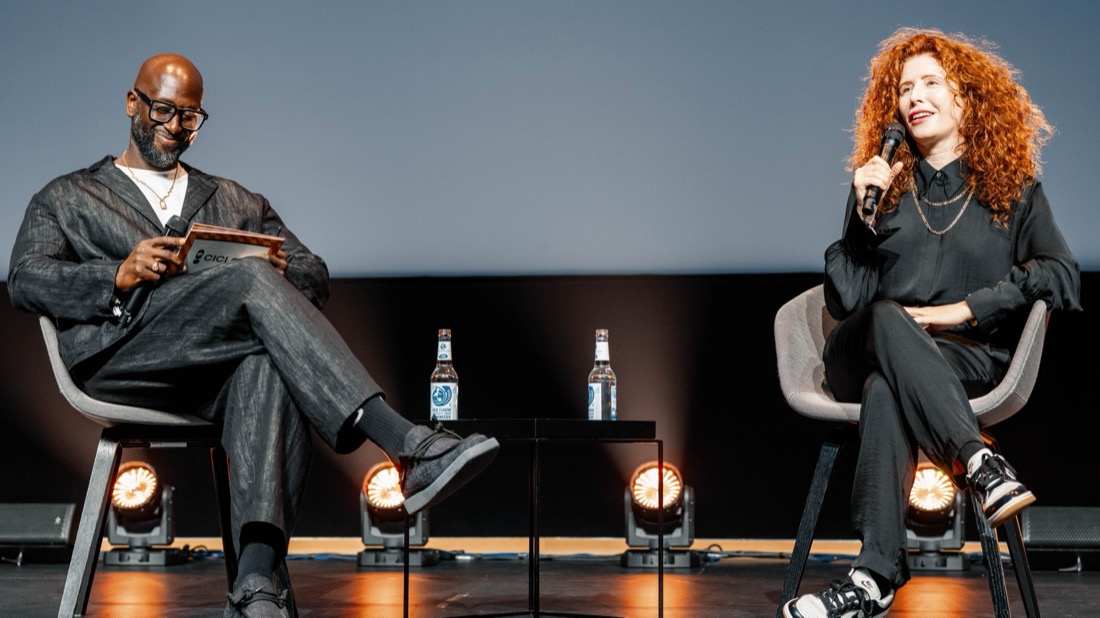
Photos: Kfir Harbi · center: Lovis Dengler Ostenrik, CICLOPE Festival 2026
| ||||||
|
Six things for your next brief
A longer newsletter this time. Six talks from CICLOPE Festival 2026, and what I took from each.
| ||||||
In early October I went to CICLOPE Festival, here in Berlin. It's an international festival about the making side of commercials, films and music videos: directing, cinematography, editing, sound and effects. It started in Buenos Aires, moved to Berlin in 2013, and has been held here every year since. Three days of talks where directors, producers, agencies and brands tell openly how the work really got made, what went wrong along the way, and what they would do differently. On the last evening the CICLOPE Awards went out in more than fifty categories. The big winners: Coinbase as Brand of the Year, Dan Streit as Director of the Year, Wieden+Kennedy as Agency of the Year and MJZ as Production Company of the Year. I had the privilege of being a guest at the festival, and it was a rare chance to learn from some of the best people in this industry. Out of a huge range of talks, I picked the six that spoke to me, and every one of them has something you can take into your next project.
I've been following Pablo for years. He keeps making me laugh, and he always stands out in my feed. Pablo started at Goodby Silverstein in San Francisco, a junior designer who became an art director, and learned fast that the ideas he loved most were the hardest to get through. When the budget is big, everyone reaches for what already worked. So he stopped waiting for a yes, made them himself and posted them: a fake pigeon from Amazon, a giant burrito in a car, a tennis ball that grunts when you hit it. Most didn't catch on, some reached millions, and the ones that did became the portfolio he shows clients today. Balenciaga has been working with him for almost eight years. His method sounds almost too simple: look at an object until it looks like something else. A World Cup ball is a laundry bin. “You change someone's mind by just putting two things together.”
Worth following: @pablo.rochat
When work started on ChatGPT's first campaign, it already had about 500 million weekly users, without a single campaign. What it didn't have was a brand, or a brief. The only brief Zach, OpenAI's executive creative director, got from Sam Altman when he started was “make art, not advertising.” And inside the company, ideas don't get approved in decks. Someone drops a video into a Slack thread and everyone argues about it. The agency's idea: take small wins from ordinary people, a dish that finally comes out right, a first pull-up, and shoot them like the last scene of a movie. At the end, the ChatGPT conversation that helped get there rolls up like credits. Instead of explaining that in a deck, they shot a rough sketch and posted it in the thread. OpenAI's answer came right away: that's the idea. The final films more or less recreate the sketch. Then the surprise: the AI company shot it all on 35mm film. Some of the leads weren't actors at all, and there were no rehearsals, so the moment wouldn't be gone before the camera rolled. In a 30-second spot the credits come up after about 12 seconds. That's all the time the film has to make you care about a stranger.
Ahead of the World Cup, Nike's football team kept hearing the same thing from young players and fans: their lives feel engineered, scripted, all data. So the brief was the opposite: instinctive, attacking, creative football. Nike's creative director called the film itself table stakes. The real job was a world that could keep producing content through the whole tournament. The idea: players on a Nike ad set, bossed around by a director like a strict manager, simply walk off and crash through other film genres. To make it feel unscripted, Dan Streit opened his treatment with a made-up email from a Nike rep, explaining how the ad had supposedly been pieced together from behind-the-scenes footage. That email became the script. “Not one person in the world has ever gone to a football match to watch a manager.” The shoot ran in two modes: a movie world, fully storyboarded, and a “real” world shot like a prank show, with cameras rolling everywhere. More than 400 hours of footage. A billion views on the film, 3.5 billion across everything around it. At CICLOPE Festival it took the Grand Prix for post-production, and Dan Streit was named Director of the Year.
Alma Har’el never went to film school. She was a bartender, bought a camera with her tips and taught herself to shoot and edit. Her early music videos for Beirut started with a cut of old Super 8 home movies she bought on eBay. She shot her first documentary, Bombay Beach, almost alone, and it won Best Documentary Feature at Tribeca in 2011. Shia LaBeouf found the DVD in a record store, misfiled in the Bob Dylan section, watched it twice that night and emailed her. They've worked together since: he starred in the Sigur Rós video she directed, and wrote Honey Boy, which she directed. Along the way came her first commercial: Airbnb's first international campaign, which she shot herself in eight or nine countries, through each host's window. On Love Over Bias, part of P&G's Thank You, Mom campaign, she found out she was the first woman ever to direct the campaign, though it's all about mothers. Mid-production she went to the agency with an idea she called totally outrageous. They said let's sit down, talked it through, and made it. She says she's still looking for relationships like that with clients, because usually it ends differently: “People say, we really want to do something new. And then they really don't.”
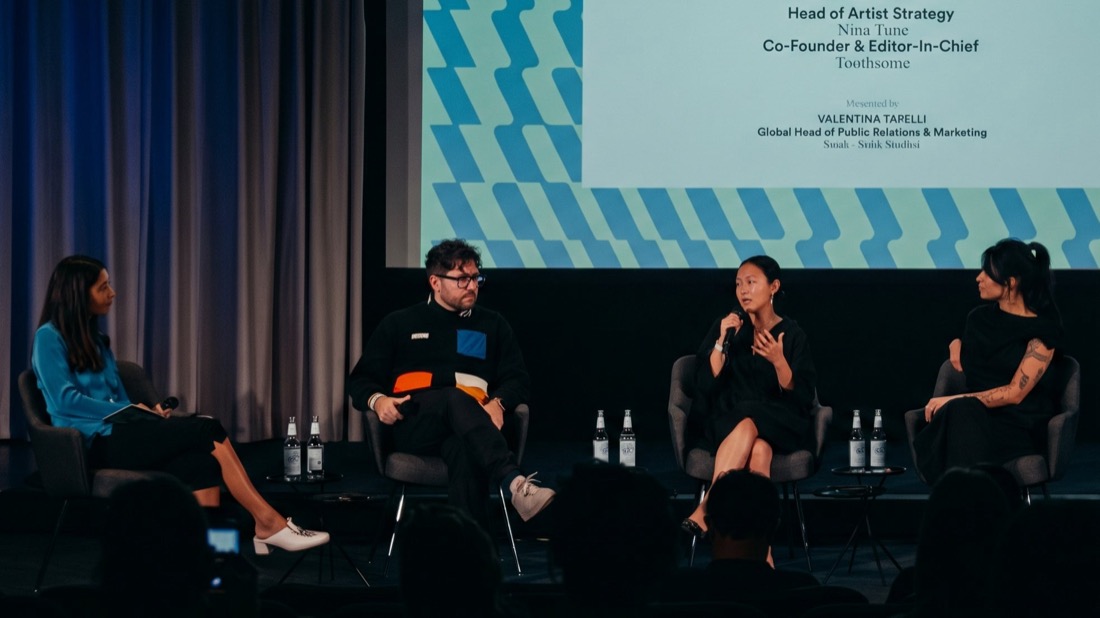
Jacobi works on Nike at Wieden+Kennedy, an agency with more than forty years of Nike ads in its archive. That's why, he says, a brilliant idea often turns out to have been done already. For him the idea comes first and the craft second: if the insight isn't strong, the craft won't matter. On a Caitlin Clark campaign for Nike, the team realised halfway through that the result they were aiming for wasn't right. They changed direction, with a client willing to move with them, and the finished film looks nothing like the storyboard. His line: “AI will take you from A to B and it won't course correct in the middle.” People will. Ninja Tune works the same way with music videos. Ashley Yun, who runs artist strategy there, looks for a director who can build a world around a whole album, not just one clip. Anna van der Velde was picked for Actress's “Overchord” because of her personal work, before the album campaign even had a brief.
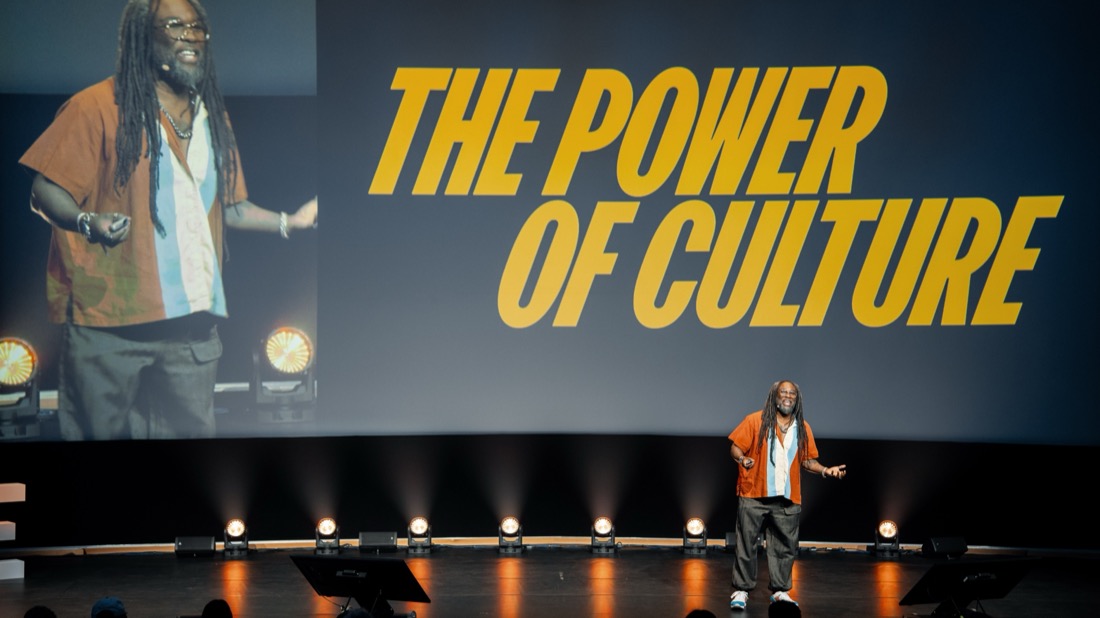
Taj has been making music videos and pop culture for more than thirty years. Among others, he produced Drake's “Hotline Bling”, Rihanna's “Work” and Kendrick Lamar and SZA's “Luther”. In 2020 he co-founded Fela, a production company in Toronto and LA, with Director X, at a time when the industry's doors were closed to him. His mother always told him: “If you don't get a seat, make your own table.” He opened with a definition, because the word gets used to death. Culture is shared beliefs, customs, language, rituals. A subculture is a smaller world inside it: gamers, skaters, basketball. And many of them have a big influence on what people buy. For Powerade's March Madness campaign, with Ogilvy, the world was basketball culture, and the question was how to make it real for the people it was made for. Instead of regular casting, they went to Canada Basketball and brought in real players, with a coach working on the movement. Some brands chase viral moments, he said. Others play the long game, because “relevance equals dominance.”
All the talks from CICLOPE Festival 2026 are on the CICLOPE Library, if you want to watch the full sessions. More about the festival at ciclopefestival.com. | ||||||
| Kfir | ||||||
|
| ||||||
| From the archive | ||||||
| ||||||
|
| ||||||
| On the decks | ||||||
| ||||||
|
| ||||||
|
Kfir Harbi · Eintrachtstr. 1, 13187 Berlin, Germany · studio@kfirharbi.com
|